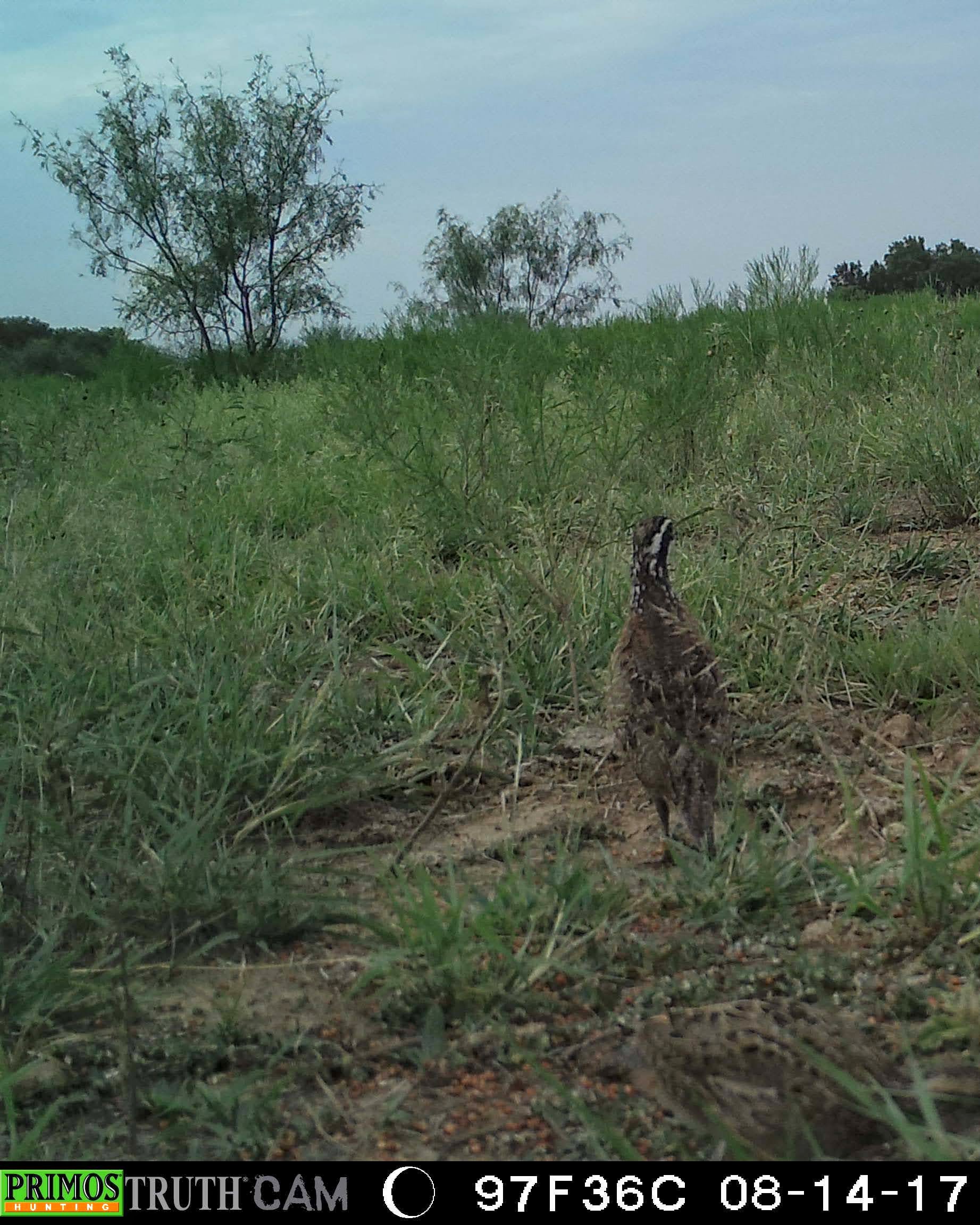
![]() Bobwhite photos courtesy of Shadow Mountain Ranch. |
Welcome |
What is the Western Navarro Bobwhite Restoration Initiative?
Why focus on the western third of the county?
Documented reports and observations, by Texas Parks & Wildlife Department (TPWD) since 2001 show that there are still small isolated populations located within suitable habitat fragments in this portion of the country.
How will the plan work?
The primary goal of the WNBRI is to create and/or maintain approximately 30,000 acres of contiguous habitat that will provide abundant forage and essential nesting, brood rearing, thermal, and protective cover.
By creating 30,000 acres of reasonably contiguous suitable habitat, current source populations will have the ability to grow and expand into unoccupied habitat over time, thus creating a viable population that can withstand natural disturbances that directly affect populations from year to year.
How do you get enough landowners together to create 30,000 acres of habitat?
A large majority of the land base within the initiative area is privately owned. Therefore, in order to reach 30,000 acre habitat goal, the Western Navarro Bobwhite Restoration Cooperative (WBR) was formed.
The role of the WNBRC is to provide an organization that can pool interested landowners together and provide a mechanism for education and information dissemination. Additionally, through partnerships between government and non-government organizations, the WNBRC can direct members towards appropriate technical or financial assistance programs that help them reach their habitat management objectives.
If I get involved with the WNBRI, what would I be expected to do?
To become an active participant in the WNBRI, the first step is to join the WNBRC by completing and mailing the form below. There are no membership fees. At the present time, the only requirement to become a member is to have a Quail Habitat Management Plan prepared for your property, and to actively implement the management practices addressed in the plan.
Quail Habitat Management Plans must identify any factors that are currently limiting habitat quality, and prescribe the appropriate management to correct any or all habitat deficiencies. Members of the WNBRC will receive a free site evaluation and Quail Habitat Management Plan from TPWD.
What are the advantages of being a WNBRC member?
|